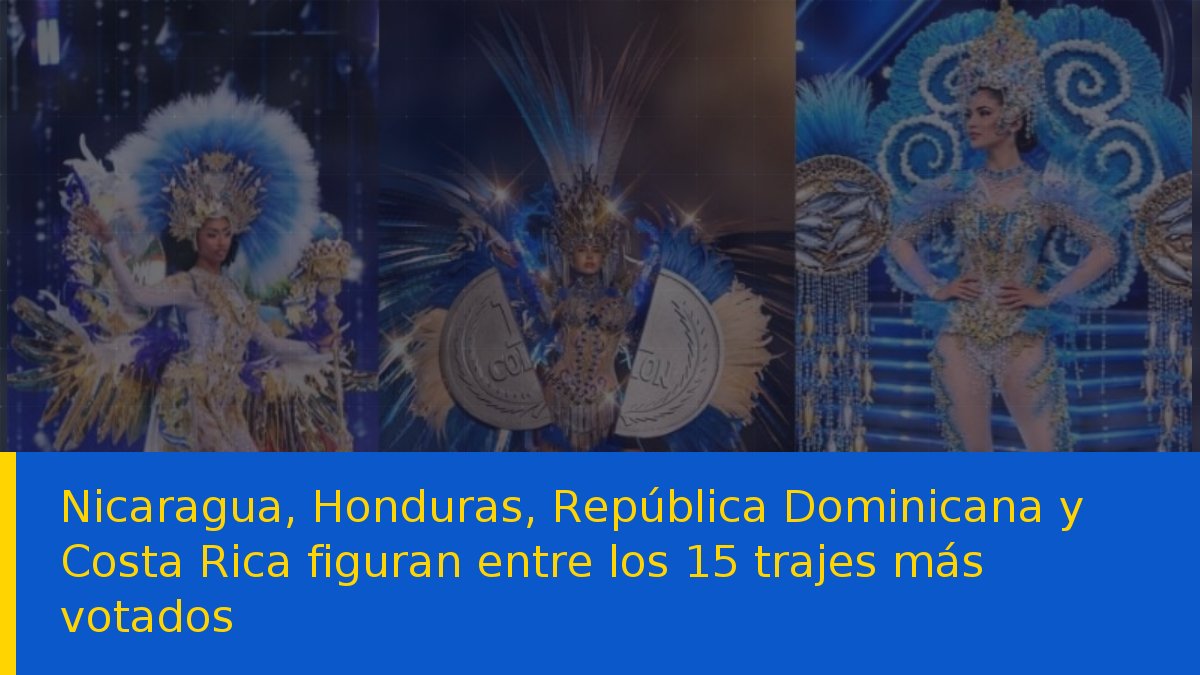
Four nations from Central America and the Caribbean secured places among the 15 most-voted national costumes at Miss Universe, according to a publication from the pageant held in Puerto Rico. The representatives of Nicaragua, Honduras, the Dominican Republic, and Costa Rica presented designs that blended ornamental structures, historical references, natural elements, and traditions specific to each country.
- Nicaragua: Jasmine Blandford wore "El vuelo de la Paz," a costume centered on the concept of peace.
- Honduras: Luisa Pineda showcased a theatrical version of the Yoro fish rain, designed by Franklin López.
- Dominican Republic: Melissa Núñez presented "Tres raíces, una nación," featuring national symbols and cultural references.
- Costa Rica: Mariale Acosta displayed "Goddess of the Golden Tropics," inspired by the country's biodiversity.
Nicaragua and Honduras: Peace and Folk Tradition
Nicaragua's representative, Jasmine Blandford, paraded in a typical costume titled El vuelo de la Paz. The proposal identified peace as the central concept of her attire, with the image of flight serving as the visual representation chosen to accompany the message. The design's name combined both concepts during Blandford's presentation on the national costume runway. The Nicaraguan entry was one of the region's creations that appeared among the most-voted outfits in the pageant's publication, though the shared material did not include details about the physical components of the piece.
Meanwhile, Honduras's representative Luisa Pineda presented a staged version of the Yoro fish rain, one of Honduras's most well-known popular stories. The design was created by Honduran Franklin López and incorporated moving fish, jewelry, rhinestones, baskets, and details evoking raindrops. The contestant's shoes had fins, while her arms carried small hanging beads to represent water during a storm.
The proposal drew on accounts from residents of the Yoro department. According to those narratives, after intense rains between May and June, hundreds of small fish appear on streets and terrain in that area. The department has no coastline on the Pacific Ocean or the Atlantic. Local versions describe darkened skies, lightning, thunder, strong winds, and several hours of rainfall before the fish appear. Families collect the animals for food, according to tradition, and the baskets included in the design alluded to that gathering moment.
The legend is also linked to Spanish priest Manuel de Jesús Subirana. Tradition holds that the religious figure prayed for food for the region's inhabitants during a period of scarcity in the 19th century. Pineda's creation brought that Honduran story to an international beauty stage. Sky blue, white, and gold tones, along with the structured headdress and side feathers, accompanied the fish-related motifs.
Dominican Republic and Costa Rica: Identity and Nature
Dominican Melissa Núñez wore a costume called Tres raíces, una nación, dedicated to the identity of the Dominican Republic. The piece brought together national symbols, traditions, and cultural references in a single composition. The design incorporated the flag's colors and a central structure with the national coat of arms. It also included a multicolor skirt with motifs linked to the country, chains around the waist, cayenne flowers, and prints of local traditions.
The outfit added a turban covering the contestant's hair. On the back appeared an open Bible, integrated with the patriotic, religious, and cultural references of the creation. The title alluded to the diversity that forms part of the Dominican historical and cultural construction. The proposal kept national emblems as the axis of the attire. A tall headdress and a scepter decorated with the coat of arms completed Núñez's presentation, who showed a multicolor dress that used the flag's tones as part of her visual identity.
Costa Rica's representative, Mariale Acosta, presented Goddess of the Golden Tropics, also called Diosa de los Trópicos Dorados. The costume was inspired by the country's biodiversity and focused on animal and plant species. Mexican Valencia Gonzaga created the design together with a team of artisans. The proposal incorporated references to the golden frog, the red-eyed tree frog, and the orchid, Costa Rica's national flower.
Green and gold tones dominated the outfit. The piece also included embroidery, crystals, a large crown, and a pink flower structure on the back. A frog figure became one of the central elements of the proposal. The structure started from a wire base and was handmade. The designer explained that the embroidery, sculptures, and crystal applications were part of the artisanal work. Green represented Costa Rica's vegetation and natural life. The pink orchid was integrated as a reference to an endemic species, while the frogs served as emblems of local fauna and a vision of female power associated with the goddess who gave the costume its name.
Regional Impact at the Gala
The presence of these four countries among the most-voted costumes reflects the commitment of Central American and Caribbean delegations to their own cultural narratives on a global stage. The designs not only competed for public preference but also served as showcases of each nation's history, nature, and symbols. The pageant, held in Puerto Rico, thus continues its tradition of displaying the cultural diversity of participants through their costumes.